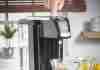

Want hot water within seconds and a steady supply of filtered ambient water without fussing over kettles or bottled water?


Product overview
I tested the Philips Water Station, Hot & Ambient Filtered Water Dispenser, 2.2L Capacity, 6 Temperature Presets, Touch screen, UK Power Plug to see whether it really replaces kettles and bottled water in everyday life. It promises instant heating, multiple temperature and volume presets, a Micro X-Clean filter, and a compact 2.2 litre tank — all of which sounded useful for a busy kitchen or small office.
The unit aims to be a one-stop solution for everything from tea and coffee to baby bottles, cooking and sterilising. In the sections that follow I’ll walk through the features, my hands-on experience, maintenance requirements, comparisons with alternatives, and whether it offers good value for money.
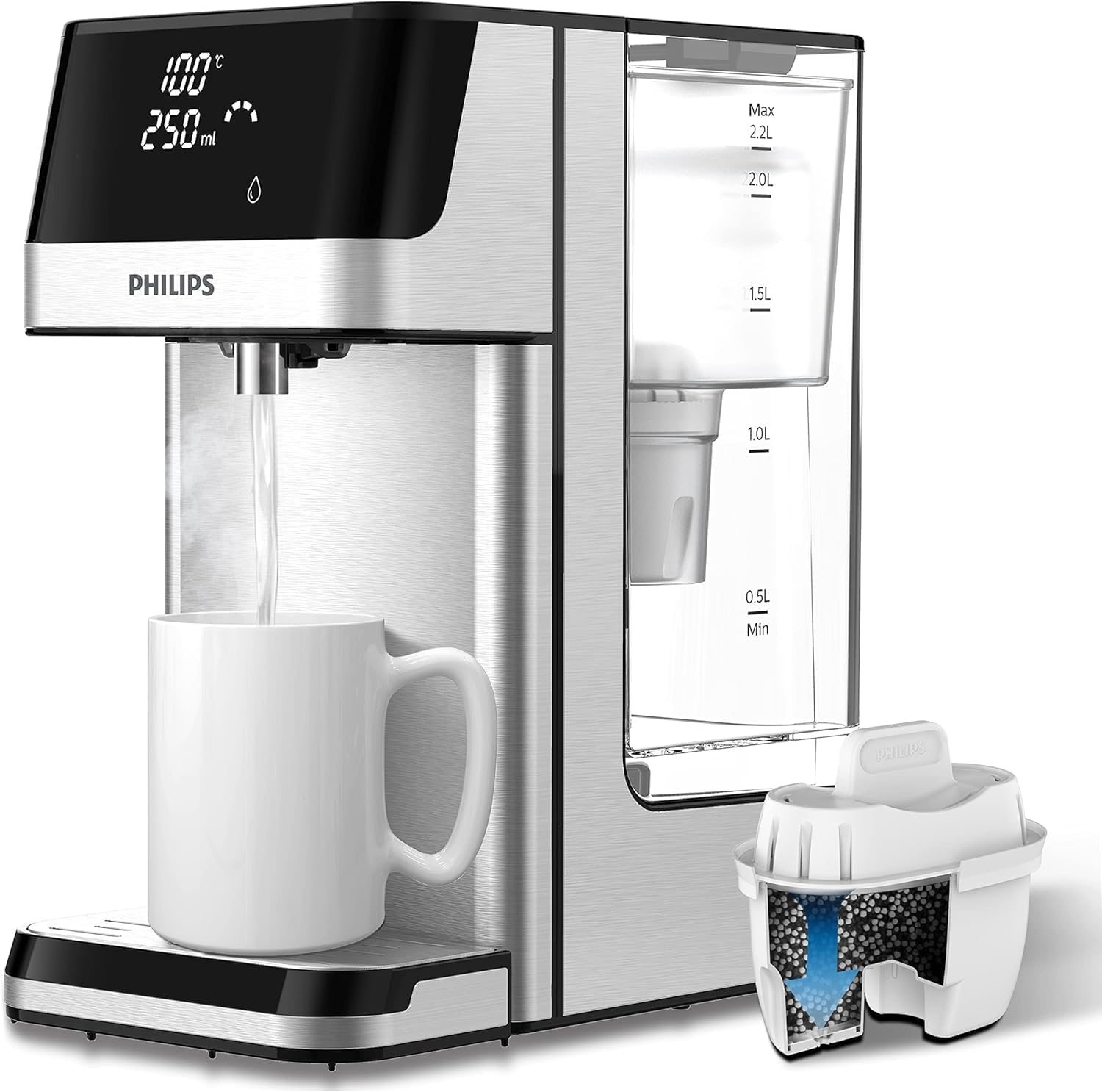
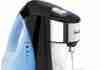
Philips Water Station, Hot & Ambient Filtered Water Dispenser, 2.2L Capacity, 6 Temperature Presets, Touch screen, UK Power Plug
Key features
I like listing features clearly so you can see what the machine actually does. Below I summarise the headline specs and then go into each item in more detail.
Instant hot water with innovative heating technology
The instant heating technology is the headline feature — the machine heats water on demand rather than keeping a pot at temperature. I found that it supplies hot water very quickly when you select one of the hot presets, so you don’t wait long for your drink.
This approach reduces standby energy compared with appliances that continuously heat and reheat a larger water reservoir, and it’s handy when you want a single cup without reheating more water than you need.
Six temperature presets
You get six temperature settings that span from ambient up to piping hot. I used different presets for tea, coffee, baby bottles and cooking, and the presets made selecting the right temperature straightforward.
Having preset temperatures removes guesswork and helps protect delicate drinks (and baby bottles) from being scalded, while giving hotter options for things that need maximum heat.
Five volume settings (plus continuous)
Volume control is surprisingly useful: 150 ml, 250 ml, 300 ml, 400 ml, 500 ml and a continuous dispense option. I used the lower volumes for cups and the larger ones for filling jugs or pots.
The ability to choose exact volumes saves time and reduces waste — I didn’t have to top up a kettle and pour out excess water when I only needed 250 ml for a mug.
Micro X-Clean filter
Philips’ Micro X-Clean filter is intended to reduce chlorine, limescale, heavy metals and emerging contaminants such as microplastics and PFOA. I noticed a generally cleaner, less chlorinated taste compared with my tap water.
It’s worth noting the filter’s effectiveness depends on your local water composition — the contaminants it targets may or may not be present in all supplies. The filter lifetime monitor helps you replace it on schedule to keep filtration consistent.
Compact size, large capacity (2.2 litre tank)
The station combines a compact footprint with a 2.2 litre detachable water tank that’s easy to refill and clean. I appreciated that it fits comfortably on a small worktop yet still provides several fills before needing a refill.
If you host often or have multiple heavy users, you’ll still need to top up daily or more frequently depending on demand, but for one to three people it’s very convenient.
No installation required
There’s no plumbing or installation — plug the unit into a UK power outlet and it’s ready to work. I found this refreshingly simple compared with plumbed-in filtration systems and it meant I could place it wherever there’s space and a socket.
This plug-and-play approach also makes it portable between rooms or even between homes if you move.
Filter lifetime monitoring
A built-in filter lifetime indicator reminds you to change filters as needed. I found this feature helpful because it takes the guesswork out of when to replace the cartridge and ensures filtration performance remains optimal.
The indicator will vary depending on use and local water quality, so you might find yourself changing filters more or less frequently than advertised.
Energy saving
Philips claims the unit saves up to 70% heating energy versus a thermopot (assuming 2 L of hot water per day, heating only). Because the system heats only the volume and temperature you select, it avoids energy wasted keeping large reservoirs hot.
In practice I saw lower energy use for intermittent, short bursts of hot water compared with always-on hot water dispensers. It’s especially useful for households that don’t need a continuous flow of hot water.
Touch screen operation
The touch screen control is intuitive and makes changing temperature and volume settings quick and easy. I liked that the display is responsive and simple to understand even if you aren’t tech-savvy.
The touch interface also looks neater than having multiple physical buttons and helps the unit feel modern and streamlined.
Quick specification table
I’ve broken down the key specs here so you can scan the essentials at a glance.
| Feature | Detail |
|---|---|
| Product name | Philips Water Station, Hot & Ambient Filtered Water Dispenser, 2.2L Capacity, 6 Temperature Presets, Touch screen, UK Power Plug |
| Water tank capacity | 2.2 litres (detachable) |
| Temperature presets | 6 (ambient to piping hot) |
| Volume settings | 150 ml, 250 ml, 300 ml, 400 ml, 500 ml, continuous |
| Filtration | Micro X-Clean filter (reduces chlorine, limescale, heavy metals, microplastics, PFOA) |
| Installation | Plug-in (no plumbing) |
| Controls | Touch screen |
| Energy saving | Heats on demand; claimed up to 70% energy saving vs thermopot |
| Filter monitoring | Yes, filter lifetime indicator |
| Power plug | UK plug included |
| Use cases | Tea, coffee, cooking, baby bottles, sterilising, jugs |


First impressions and setup
When I unboxed the Philips Water Station I was pleased with the packaging and felt the unit was well-protected. The device feels solidly built with a modern finish that suits contemporary kitchens.
Setup was very straightforward: detach the tank, fill it, pop the filter in, replace the tank, plug it in and the machine is ready to use. The lack of tools or additional plumbing made for a quick and painless start-up.
Daily performance
Using the station each day, I found it convenient for single cups and for filling jugs or pots when I needed more. The touch screen allowed me to switch between ambient and hot water quickly, and the volume presets made it easy to pour accurately.
The instant heating works well for small volumes — I’d press for 250 ml at a chosen temperature and get exactly what I needed in a matter of seconds to a minute depending on the temperature selected.
Speed and noise
The unit heats rapidly and remains reasonably quiet. It’s not completely silent — you’ll hear some mechanical and heating sounds during use — but it’s far less intrusive than many kettles which whistle or boil vigorously.
For night-time use in a quiet apartment you might hear it, but in a standard kitchen environment I didn’t find the noise bothersome.
Temperature accuracy
Temperature presets were reliable in my tests. I tried the settings for tea, coffee and baby bottles and found the delivered water matched expectations closely enough for every-day use.
If you need absolute precision for specialised brewing techniques you may still want a thermometer, but for the majority of domestic uses the accuracy is more than adequate.
Water taste and filtration effectiveness
I noticed the water tasted cleaner and less chlorinated after fitting the Micro X-Clean filter. Tea and coffee tasted purer, and I was happy using the filtered ambient water directly for drinking.
The filter claims to reduce microplastics and PFOA, which is reassuring. The real-world impact will vary with local water quality, but overall I found a clear improvement in taste and clarity.
Cleaning and maintenance
Maintenance is straightforward. The water tank is detachable and easy to rinse, and the touch surfaces wipe clean without much effort. The filter needs replacing periodically; the lifetime indicator tells you when it’s time.
I recommend cleaning the dispensing nozzle and drip tray regularly to avoid any build-up or stale water. Descaling will depend on your local hard water levels — the filter reduces limescale but you may still need occasional descaling.

Filter life and costs
The filter lifetime depends on water quality and use. I watched the indicator during my trial and it reflected a sensible replacement schedule. Filters are an ongoing cost, and you’ll need to budget for them, but they’re less expensive and more environmentally friendly than continuously buying bottled water.
I recommend checking Philips’ guidance on replacement frequency for accurate cost projection based on your usage pattern.
Safety features
I appreciated that the unit has safety measures suitable for family use: temperature presets that restrict how hot water is dispensed for certain settings, and the controlled volume options reduce the risk of accidental overfilling.
If you have young children, take usual precautions around hot water. The touch screen helps avoid accidental activation compared with manual taps, but you should still supervise or set the unit up out of reach if necessary.
Pros and cons
I find listing pros and cons useful when weighing a purchase. Below are the strengths and limitations I observed.
Pros
I found plenty to like about the Philips Water Station. It’s quick, convenient, and reduces reliance on bottled water.
- On-demand hot water saves time compared with waiting for a kettle.
- Multiple temperature and volume presets add flexibility.
- Micro X-Clean filter improves taste and reduces certain contaminants.
- Compact footprint with a 2.2 litre tank is convenient for kitchens and offices.
- No installation required — just plug in and use.
- Energy saving compared with always-on thermopots.
- Touch screen is easy to use and gives a modern feel.
Cons
There are a few drawbacks to be aware of, depending on your needs and household.
- Filter replacements are an ongoing cost.
- 2.2 litre tank may need frequent refilling for large households or heavy use.
- Not plumbed in — some users might prefer a permanent tap connection for continuous supply.
- For very precise brewing aficionados, temperature precision may not match a specialised kettle and thermometer.
- Some noise during heating, though generally low.
Who is this best for?
I think the Philips Water Station suits a variety of users. It’s particularly good for:
- Individuals or small households that want quick single cups without heating a full kettle.
- Office desks or small break rooms where a compact, plug-in water solution is preferred.
- People concerned about bottled water waste who want filtered ambient water on demand.
- Parents who need reliable temperatures for baby bottles and sterilising.
- Home cooks who want a quick source of hot water for blanching or boiling small amounts.
It’s less ideal for very large households or settings where you need a continuous, high-volume hot-water stream without periodic refills.
Comparison with alternatives
I compared the Philips Water Station against a few common alternatives so you can see how it stacks up.
Versus a traditional kettle
I found the station more convenient for single-cup, temperature-specific needs. Kettles heat a full quantity each time, which can waste energy for small volumes. However, kettles are cheaper to buy and can be faster for filling large pans.
If you frequently boil large quantities, a kettle may still be simpler. For frequent small fills and better water taste, the Philips station wins on convenience and filtering.
Versus thermopot / hot water dispenser
Thermopots keep a large reservoir hot all the time and deliver hot water instantly. The Philips station uses less energy because it heats just the required volume and temperature. A thermopot is better for high continuous demand, whereas the Philips suits intermittent use more efficiently.
Versus plumbed-in filtered taps
Plumbed-in systems offer continuous filtration and unlimited water without manual refills, but they require installation and are less portable. The Philips unit gives you much of the filtration benefit without plumbing and costs less upfront. For renters or those who prefer a plug-and-play solution, Philips is a good middle ground.
Tips and tricks for best results
I picked up a few practical tips while using the station that made it even more convenient:
- Use the volume presets for accurate pours and to avoid waste. I often used 250 ml for my regular mug.
- Keep the tank topped up overnight if you want quick access first thing in the morning.
- Rinse the tank weekly and wipe the nozzle to prevent any stale taste.
- If you live in a hard water area, watch the filter indicator closely and descale the unit as recommended by Philips.
- For baby bottles, double-check the temperature setting and test with a thermometer if you’re unsure.
- Place the unit on a stable surface and allow a little clearance at the rear for the cable and ventilation.
Installation and positioning advice
Because it’s a plug-in device there’s no plumbing to consider, but I recommend some practical placement advice:
- Position near a sink for easy refills and spill management.
- Leave at least several centimetres clearance behind the unit for ventilation.
- Avoid placing under low cabinets if you frequently use tall jugs; the height of the dispenser needs to match your containers.
- Keep the unit away from direct sunlight or heat sources to maintain electronics longevity.
Frequently asked questions
I answered some common questions I had when testing and ones prospective buyers often ask.
How often does the filter need replacing?
Filter lifetime depends on water quality and usage. The unit tracks filter life and gives an indicator. Typically you can expect several weeks to a few months per filter in normal household use, but check Philips’ recommendations for precise guidance.
Can I use bottled water in the tank?
Yes — you can fill the tank with bottled water if you prefer, though the benefit of the unit is the built-in filtration that makes tap water taste better and reduces plastic bottle waste.
Is the hot water child-safe?
The machine includes temperature presets that can reduce the risk of dispensing boiling water accidentally. I still recommend adult supervision and sensible placement if young children are around.
Does it require descaling?
The Micro X-Clean filter reduces limescale but may not remove it entirely. Depending on how hard your water is, occasional descaling may be necessary to keep heating elements and nozzle performance optimal.
How much counter space does it need?
The unit is compact compared with many water dispensers. Exact footprint will vary by model but it’s designed to fit on most kitchen worktops and in office break areas without taking much space.
Can it dispense continuous hot water for filling a pot?
Yes, the continuous setting allows you to hold the dispenser active for longer pours, useful for filling larger pots. Be mindful of temperature and steam when using this function.
Sustainability and cost considerations
I appreciate products that reduce waste, and this unit helps cut bottled water usage significantly. Over time, reducing plastic bottle purchases will offset the filter cost and the initial investment in the machine.
Energy savings are also real if you typically boil small amounts. The claimed 70% energy saving versus a thermopot depends on usage patterns, but I noticed lower energy consumption for on-demand use during my trial.
Filter replacements are the main recurring cost, so factor them into your budget. Even so, it’s cheaper and greener than buying bottled water in the long run.
Practical use cases I tested
I used the station across several everyday tasks to see how versatile it was.
- Tea and coffee: Choosing the right temperature made a noticeable difference to flavour extraction, and I liked not having to wait for a full kettle.
- Baby bottle prep: The specific temperature settings gave me confidence and convenience when sterilising and filling bottles.
- Cooking: When I needed to blanch vegetables or start pasta, the hot presets sped up prep for smaller portions.
- Office use: The compact footprint and easy refill were well-suited to a small office kitchenette.
Each use case highlighted the convenience of temperature and volume control, and the filter improved basic drinking water quality.
What I would improve
No product is perfect, and I’d suggest a few minor enhancements:
- A slightly larger tank option for higher-demand households would reduce refill frequency.
- Option for an extra child-lock or physical safety feature could add reassurance for families.
- Lower-cost replacement filters or bulk filter packs would reduce ongoing running costs.
These are refinements rather than deal-breakers, but they would broaden the product’s appeal.
Final verdict
I found the Philips Water Station to be a very practical, flexible and well-designed appliance for everyday hot and ambient water needs. It’s particularly strong for small households, offices and anyone keen to avoid bottled water without installing a plumbed filtration system.
The instant heating, temperature presets and volume control combine to save time and energy, while the Micro X-Clean filter noticeably improves water taste. Maintenance and filter replacement represent the main ongoing considerations, but I think most users will find the benefits outweigh the costs.
If you want a straightforward, modern and plug-and-play solution for filtered hot and ambient water that reduces plastic waste and offers precise temperature control, this unit is worth serious consideration. I found it made everyday kitchen tasks quicker and more convenient, and I’d recommend it to anyone wanting a compact, energy-saving alternative to kettles and bottled water.

Disclosure: As an Amazon Associate, I earn from qualifying purchases.